Avro Lancaster
Real Vehicle Profile

Avro Lancaster

车辆背景与资料

Avro Lancaster,通常被称为Lancaster Bomber,是英国在第二次世界大战期间使用的重型轰炸机。它由Avro公司设计和制造,与Handley Page Halifax是同时代的产物,这两种轰炸机都是根据相同规格开发的,此外还有Short Stirling,这三种飞机都是英国皇家空军(RAF)在同一时期采用的四引擎重型轰炸机。

Lancaster的起源可以追溯到双引擎的Avro Manchester,该机型在1930年代末期为响应空军部P.13/36规范而开发,该规范要求一种用于“全球使用”的中型轰炸机,能够内部携带鱼雷并进行浅俯冲轰炸攻击。最初作为Manchester的演进型号开发,后者在服役中问题频出于1942年退役,Lancaster由Roy Chadwick设计,配备四台Rolls-Royce Merlin发动机,其中一个版本使用Bristol Hercules发动机。它于1942年首次在RAF Bomber Command服役,随着欧洲战略轰炸攻势的加强,它成为随后夜间轰炸行动的主要机型。随着该型号产量的增加,它成为RAF、加拿大皇家空军(RCAF)以及在RAF内服役的其他英联邦和欧洲国家中队使用的主要重型轰炸机,超越了Halifax和Stirling这两种同样常用的轰炸机。

一个长而无障碍的炸弹舱意味着Lancaster可以携带RAF使用的最大炸弹,包括4,000磅(1,800公斤)、8,000磅(3,600公斤)和12,000磅(5,400公斤)的“blockbusters”,这些载荷通常辅以较小的炸弹或燃烧弹。这款俗称“Lanc”的飞机成为第二次世界大战期间使用最广泛的夜间轰炸机之一,在156,000次出击中投掷了608,612长吨(618,378,000公斤)的炸弹。Lancaster的多功能性使其被选中装备617中队,并被改装以携带Barnes Wallis设计的Upkeep“弹跳炸弹”,用于Operation Chastise,即攻击德国鲁尔河谷水坝的行动。尽管Lancaster主要是夜间轰炸机,但它在许多其他角色中表现出色,包括日间精确轰炸,为此一些Lancaster被改装以携带12,000磅(5,400公斤)的Tallboy和随后22,000磅(10,000公斤)的Grand Slam地震炸弹(同样由Wallis设计)。这是战争中任何轰炸机的最大载荷。

1943年,一架Lancaster被改装为Metropolitan-Vickers F.2涡轮喷气发动机的测试平台。Lancaster后来被用于测试其他发动机,包括Armstrong Siddeley Mamba和Rolls-Royce Dart涡轮螺旋桨发动机,以及Avro Canada Orenda和STAL Dovern涡轮喷气发动机。战后,Lancaster作为RAF主要战略轰炸机的地位被Avro Lincoln取代,后者是Lancaster的更大版本。Lancaster承担了远程反潜巡逻飞机(后来被Avro Shackleton取代)和海上救援的角色。它还用于照片侦察和航空测绘,作为空中加油的飞行加油机,以及作为Avro Lancastrian,一种远程、高速、跨大西洋的客运和邮政运输客机。1946年3月,BSAA的一架Lancastrian从新的伦敦希思罗机场执飞了首个定期航班。
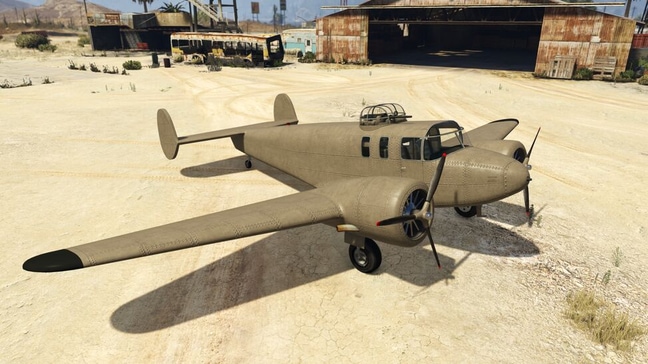
关联 GTA 载具

图片资料

Lancasters on Avro's Woodford assembly line at Cheshire, 1943
Lancasters under construction at Avro's factory at Woodford, Cheshire, 1943
PA474, Lancaster B.I of the RAF Battle of Britain Memorial Flight
Three 44 Squadron Avro Lancaster B.Is in 1942
Bomb aimer in his position in the nose
Inside G for George of No. 460 Squadron . Looking forward between wing spars. At left is the wireless operator, and at right is the navigator
Battle of Britain Memorial Flight Lancaster Mk I PA474 in flight showing nose, dorsal and tail .303 Browning gun positions
Gunner in Fraser Nash FN50 mid-upper turret with twin .303 Brownings, February 1943
Gunner in the Nash & Thompson FN20 tail turret
The Rose turret
The Rose turret
Lancaster B.I of No. 101 Squadron RAF dropping bundles of ' Window ' followed by 30 lb (14 kg) incendiaries and a 4,000 lb (1,800 kg) "cookie"
Tallboy bombs displayed with a standard R5868 Lancaster at RAF Scampton .
A 617 Squadron Lancaster dropping a Grand Slam bomb on the Arnsberg viaduct, March 1945.
An RAF officer inspects the hole left by a Grand Slam in the reinforced concrete roof of the Valentin submarine factory in Bremen , Germany
Lancasters of No. 50 Squadron fitted with exhaust shrouds intended to conceal exhaust flames from night fighters
Crewman with homing pigeons , 1942. Pigeons were customarily carried aboard Lancasters as a means of communications in the event of a crash, ditching or radio failure.
A Lancaster over Hamburg, circa 1943
A Lancaster being fuelled from an AEC Matador truck, 1944
RCAF 405 Squadron Lancaster 10MP Maritime Patrol aircraft in February 1953
B.I Special loaded with a Grand Slam
B.II with Bristol Hercules radial engines
"Upkeep" bouncing bomb used for dam busting bomb mounted under Lancaster B.III (Special). The chain was driven by a hydraulic motor and gave the bomb its backspin .
Lancaster B Mk.I drawing with extra side views for the B Mk.I (Special) with Grand Slam bomb, Hercules-powered B Mk.II with bulged bomb bay doors and FN.64 ventral turret and the B Mk.III (Special) with the Upkeep store
Propaganda shot before bombing up an RCAF 428 Squadron B Mk X. This aircraft carries the early "needle-blade" propellers.
The sole, Canadian-built, Lancaster B.XV/Lincoln B.XV
The two surviving airworthy Lancasters during a joint display at the Eastbourne International Airshow in 2014
Diagram comparing the Lancaster (blue) with its RAF contemporaries; the Short Stirling (yellow) and the Handley Page Halifax (pink).
When the 1955 film The Dam Busters was made, the bomb remained classified so the producers created a convincing alternative.
Propaganda poster
Propaganda poster